
Environmental protection requires more than good intentions and policies on paper. It calls for sound governance, responsible management of public resources, and mechanisms that ensure environmental commitments translate into meaningful action.
These were among the key considerations behind Green Means Go: The Role and Potential of Environmental Auditing, a public policy discussion organized by the FEU Public Policy Center (FEU PPC) on October 19, 2026, at the Far Eastern University – Manila Auditorium.
The event brought together experts from government, the academe, and the local public sector to examine how environmental auditing can strengthen accountability and inform decision-making, particularly at the local level.
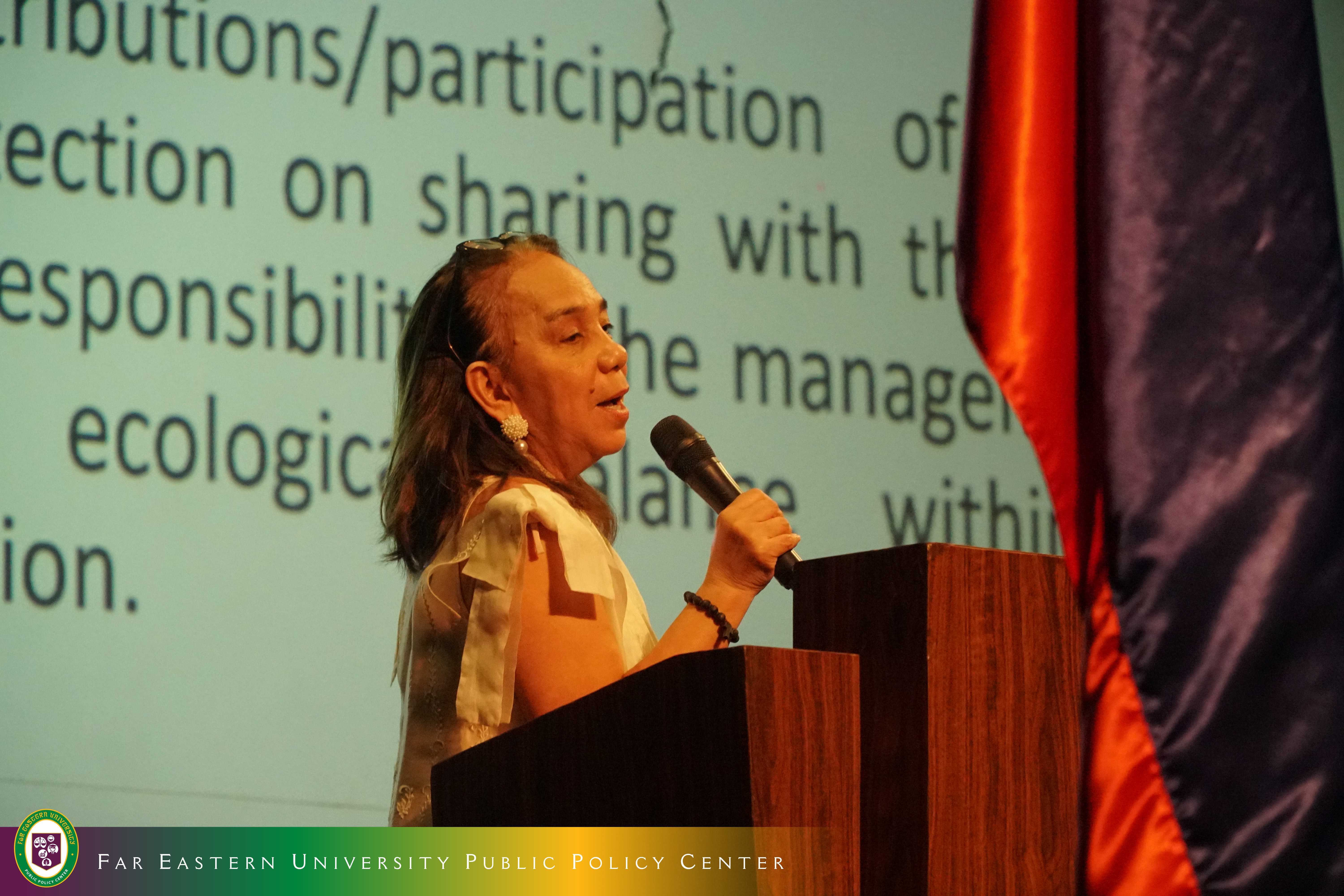
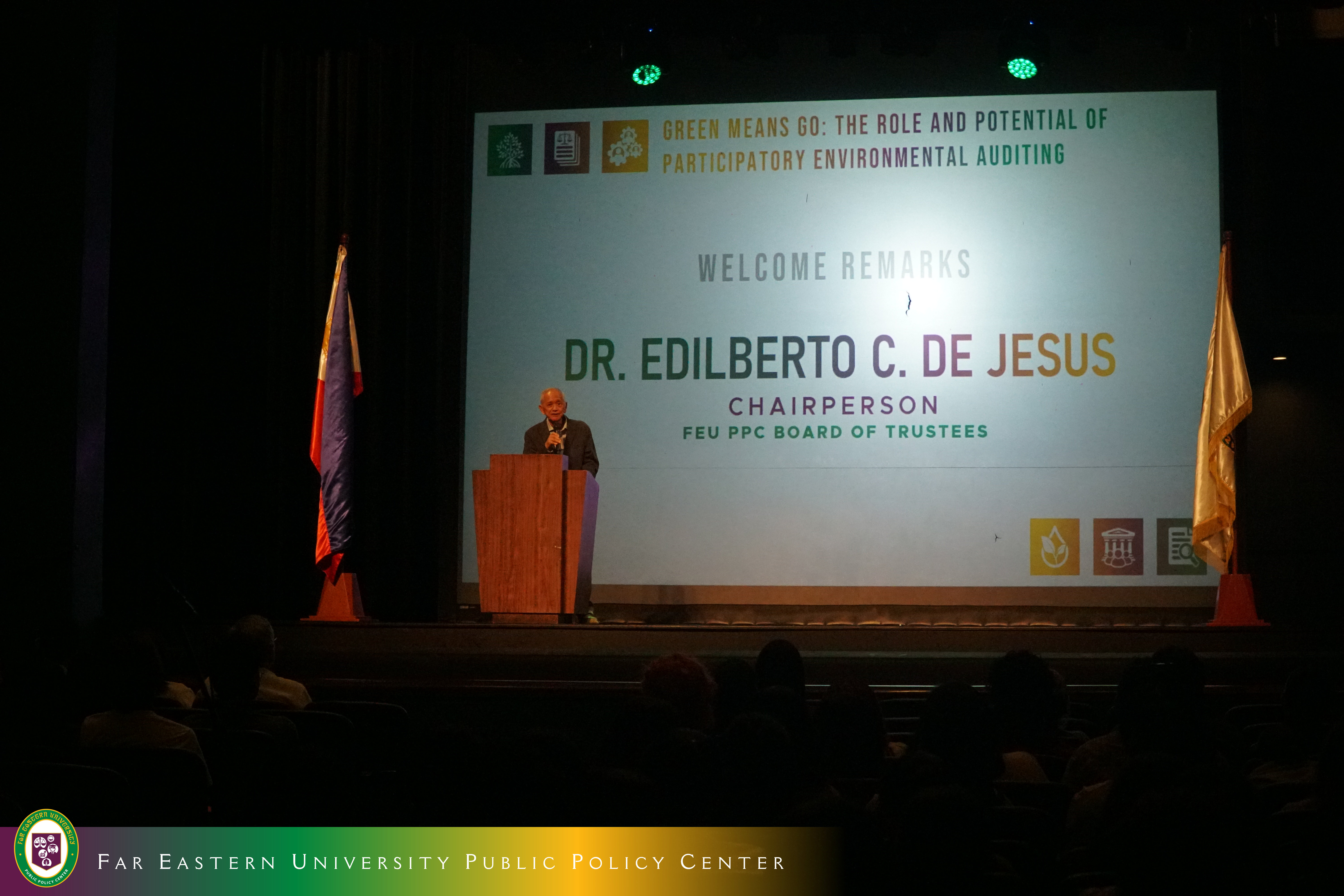
The forum opened with welcome remarks from Dr. Edilberto C. de Jesus, Chairperson of the FEU PPC Board of Trustees, who set the context for the discussion and welcomed participants to the event. This was followed by the introduction of the keynote speaker by Dr. Arturo G. Corpuz, Trustee of the FEU Public Policy Center, who highlighted the significance of the topic and introduced the day’s resource person — former Commission on Audit (COA) Commissioner Heidi Mendoza. She delivered the keynote address on Environmental Accounting in the Local Level, highlighting the importance of understanding and accounting for the environmental implications of public policies, programs, and resource management.
Her presentation set the stage for a panel discussion featuring Mendoza, Dr. Agustin Arcenas, Professor at the University of the Philippines Los Baños College of Public Affairs and Development, and Glenn Ruiz Rutor, Technical Staff and Acting Section Chief of the Community Relations and Information Section under the Environmental Management and Protection Division of the Manila City Department of Public Services.
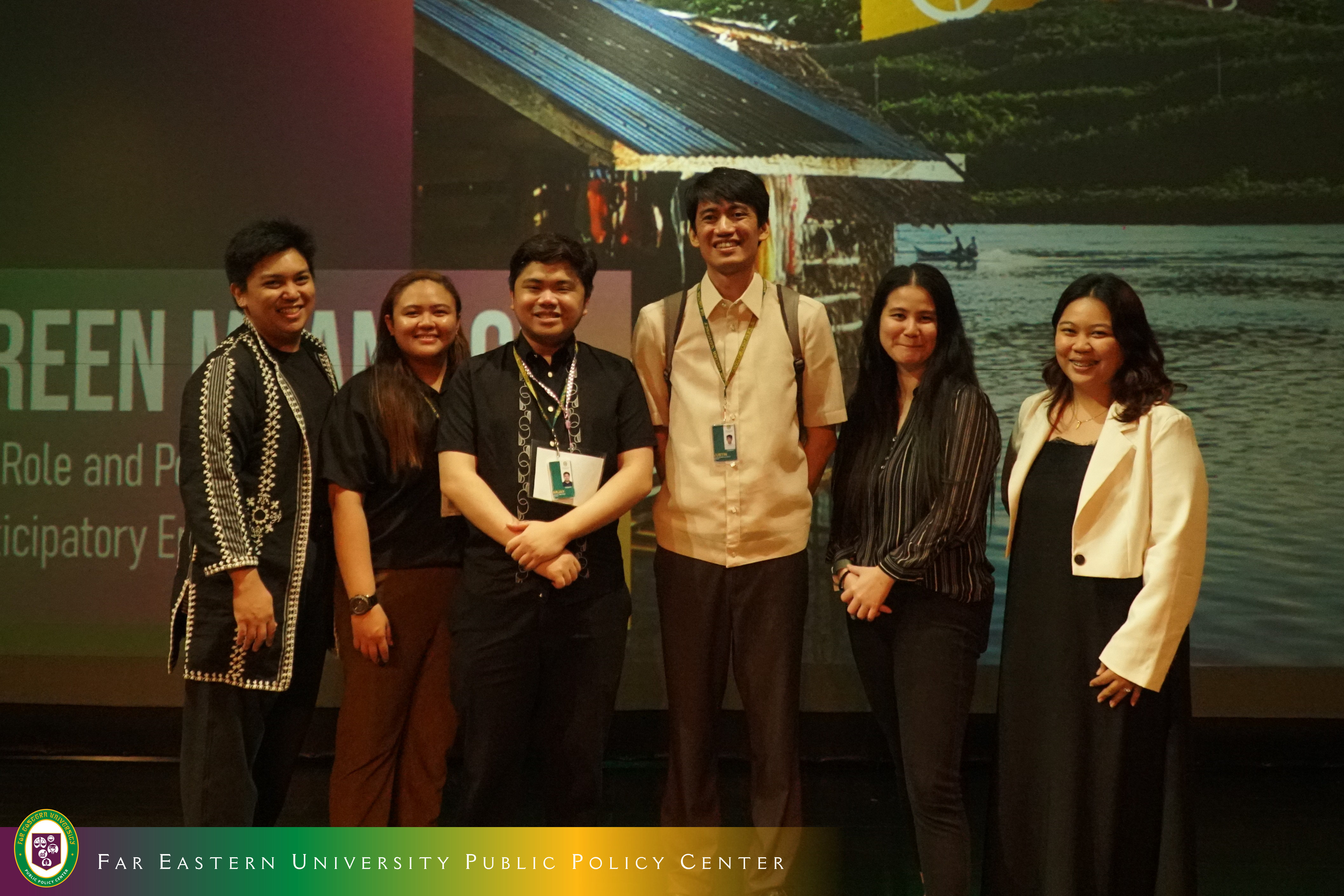
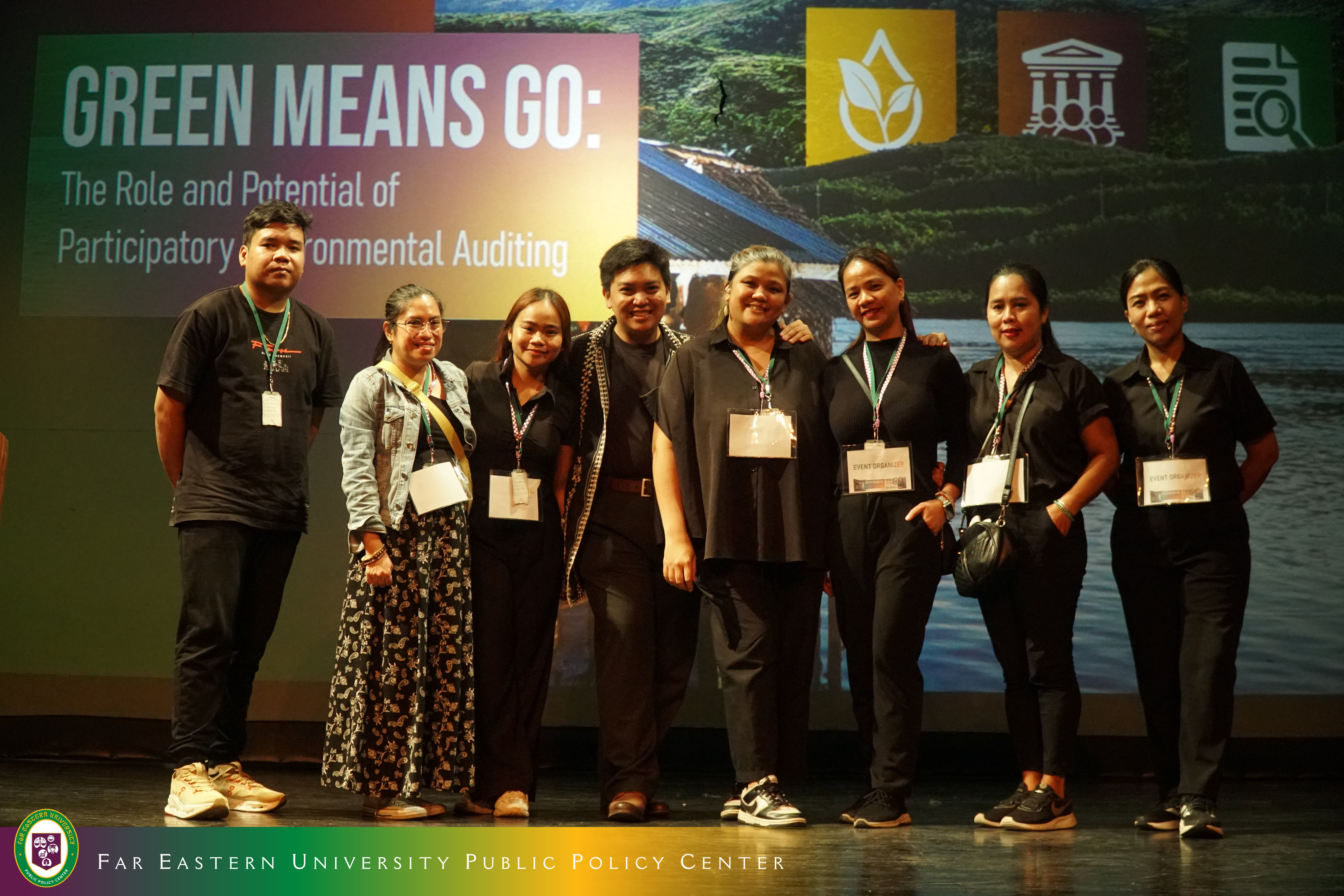
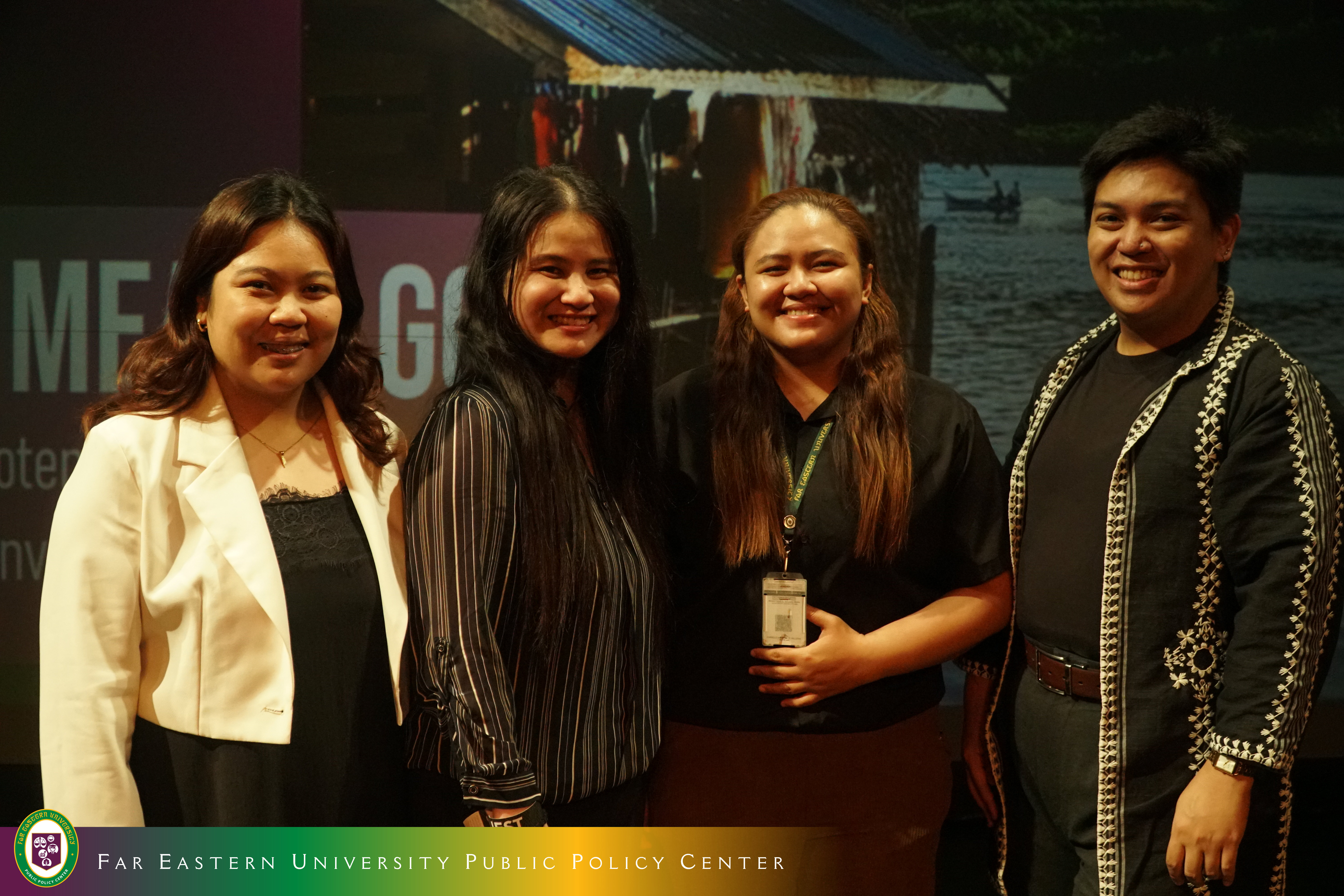


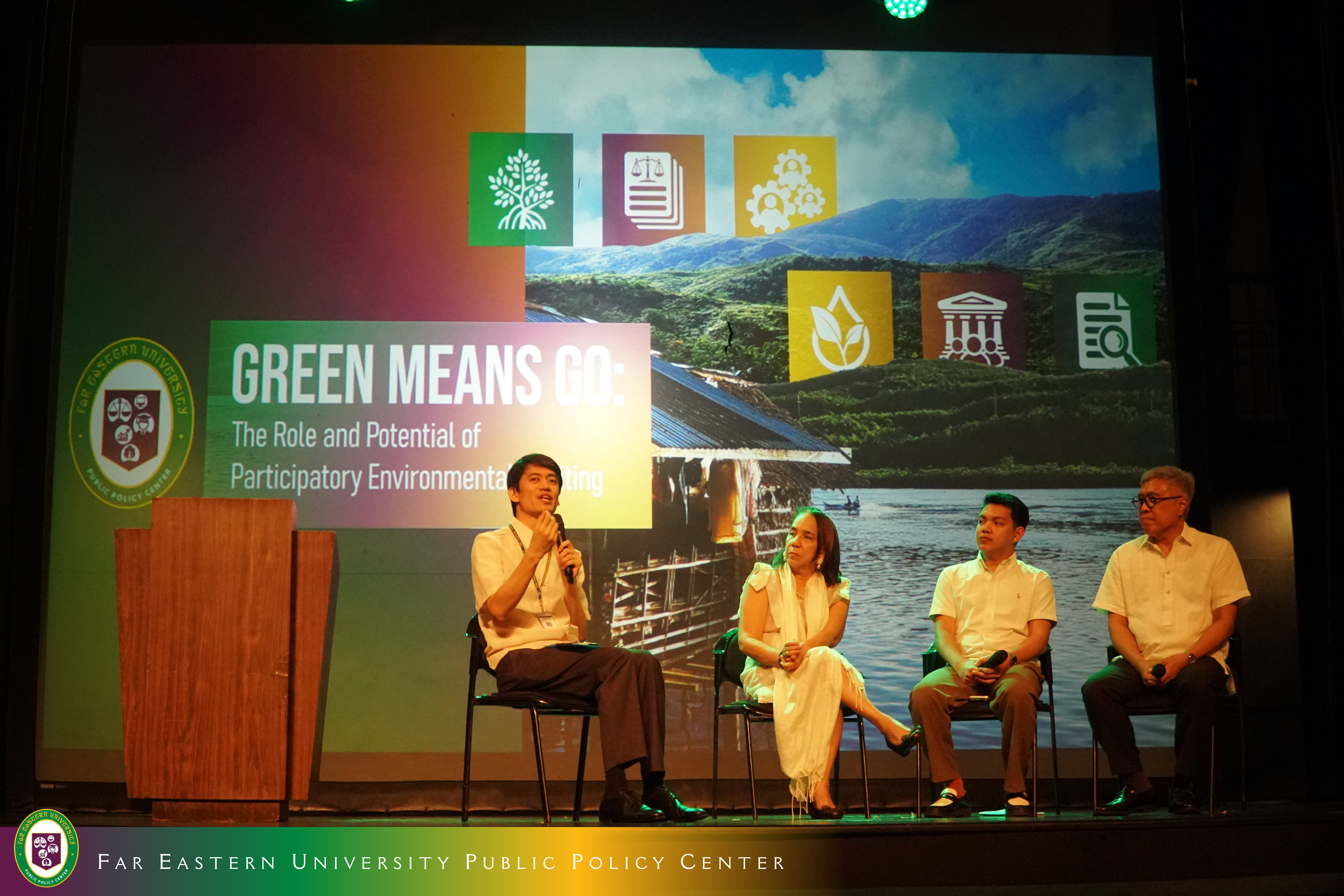

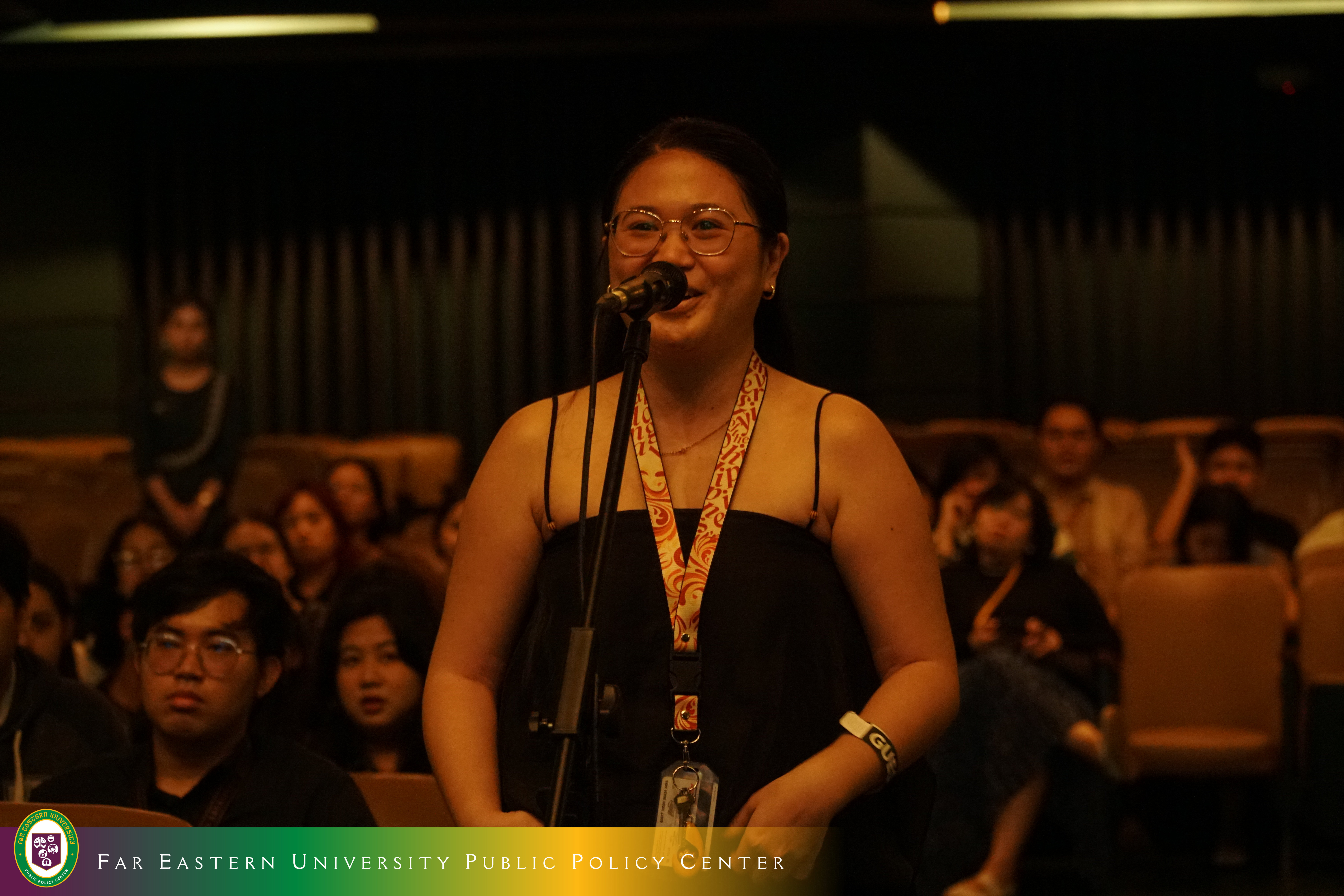

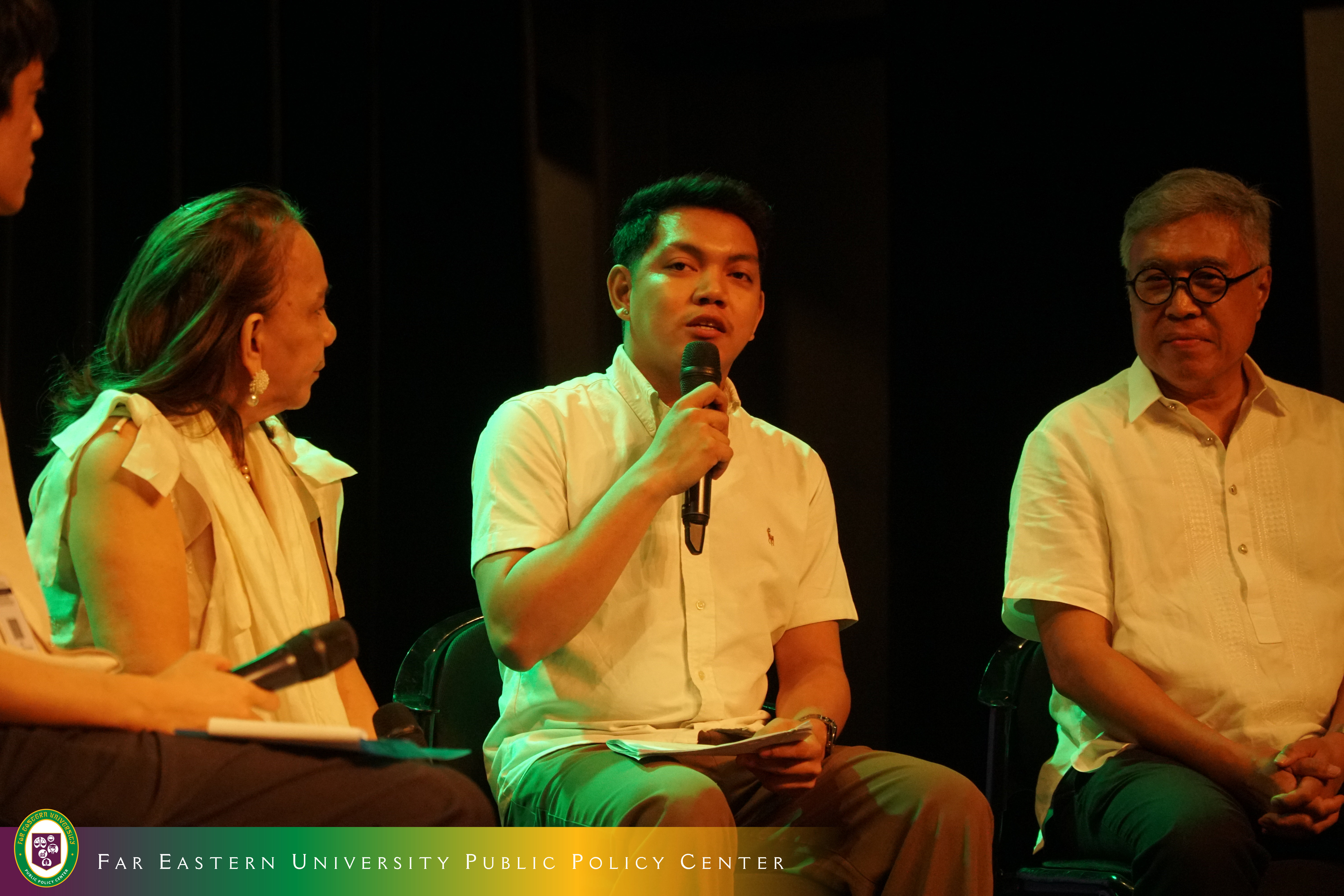
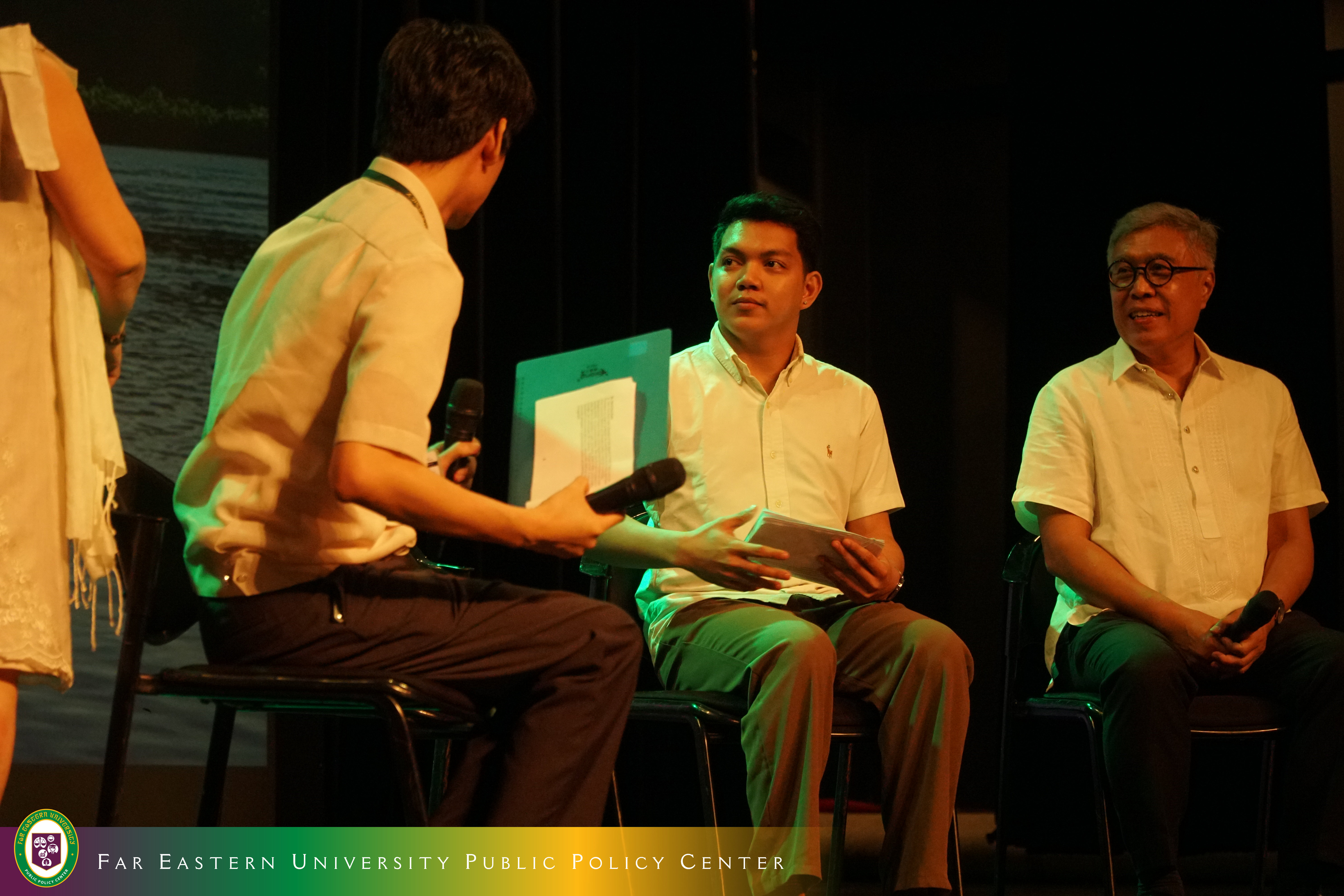


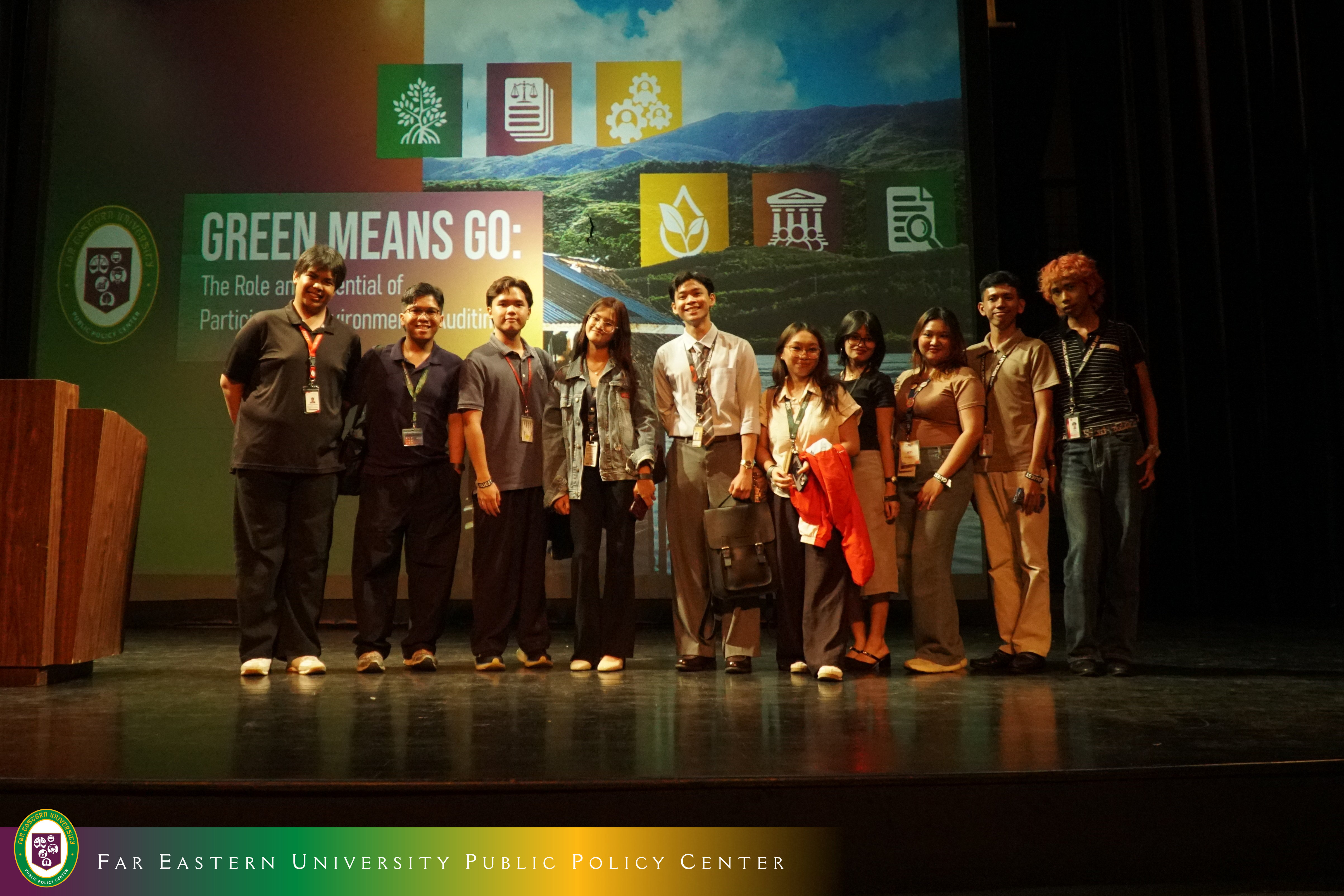
Audience members from different schools and organizations were also provided with an opportunity to engage the speakers and raise questions on the challenges and opportunities surrounding environmental auditing. The panel discussion and open forum were moderated by FEU PPC Executive Director Justin Muyot.
Bringing together perspectives from auditing, academic research, and local government practice also underscored the importance of collaboration across institutions in addressing environmental concerns. Effective environmental governance depends not only on the policies adopted, but also on the capacity of institutions to implement, monitor, and account for their actions.
The forum also featured a student reaction from Ronald Gabriel Teng, Founding President of the FEU Research and Outreach Organization for Towards Sustainability (FEU ROOTS), bringing a student perspective to the discussion and highlighting the importance of engaging the next generation in conversations on sustainability and public accountability.
Dr. Michael M. Alba, President of the FEU Public Policy Center, delivered the closing remarks, reaffirming the Center’s commitment to advancing informed public discourse and promoting evidence-based policymaking. He underscored the importance of creating spaces where experts, practitioners, policymakers, and the public can come together to examine pressing societal concerns and explore practical policy responses. The discussion on environmental auditing reflects FEU PPC’s continuing efforts to bring policy research and public engagement together in support of accountable institutions, responsive governance, and sustainable development.
Ultimately, environmental auditing offers an opportunity to look beyond conventional measures of public sector performance. It encourages institutions to consider not only how public funds are spent, but also how public decisions affect natural resources, ecosystems, and the communities that depend on them.