


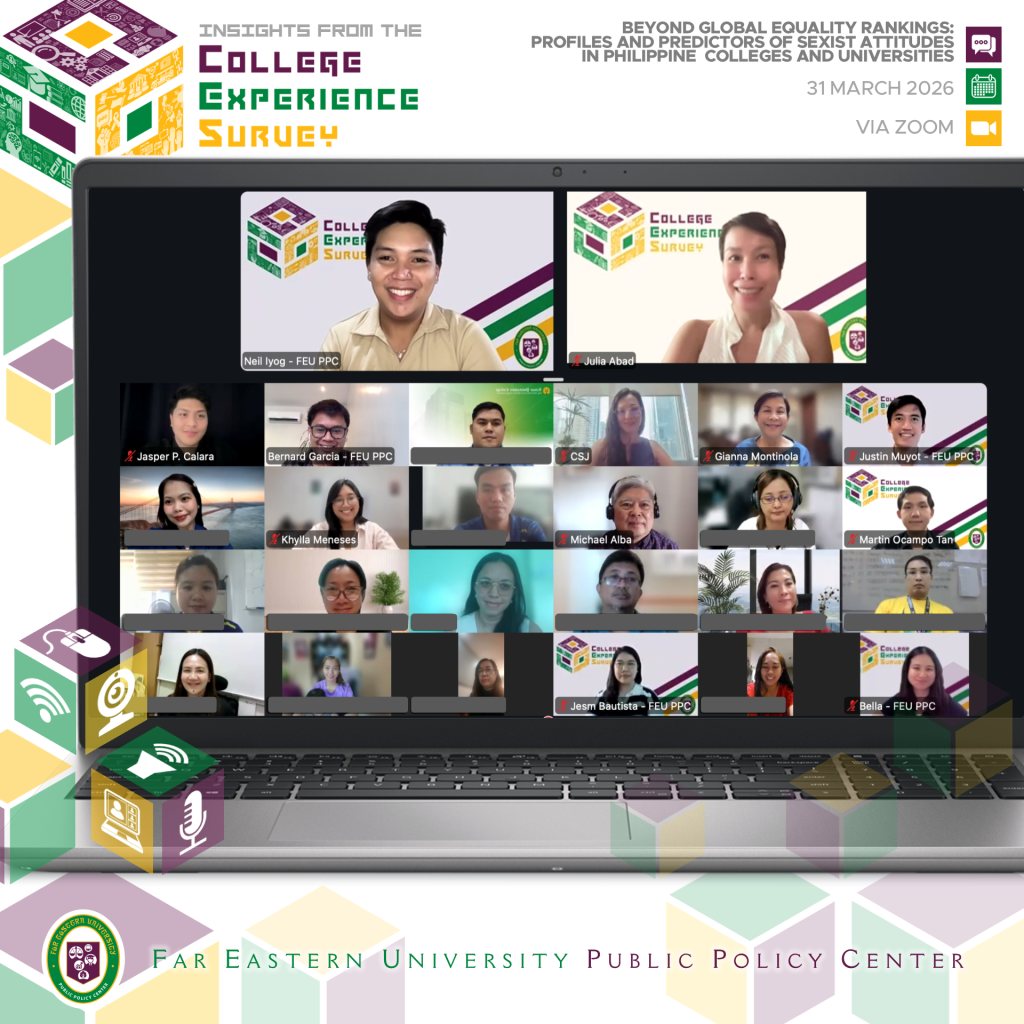



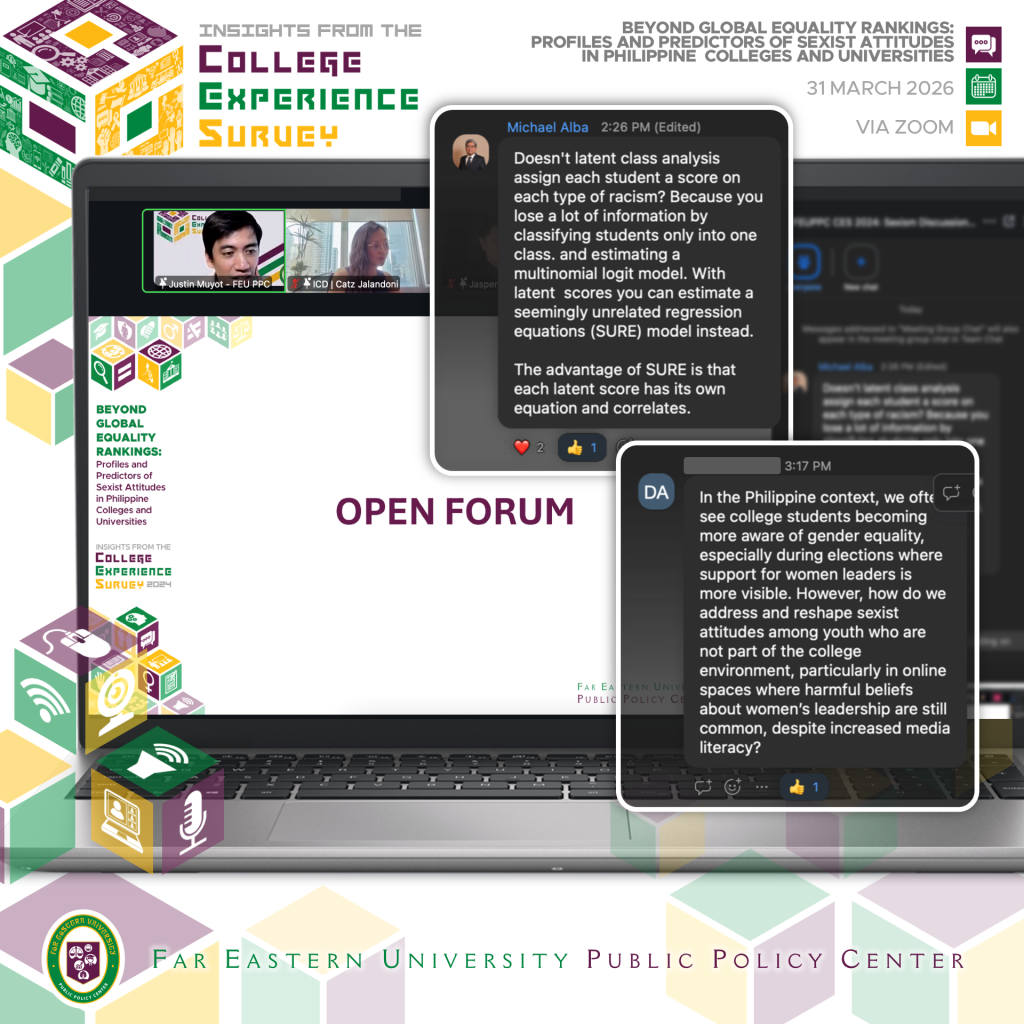
The FEU Public Policy Center (FEU PPC) successfully convened students, youth leaders, policymakers, and experts for the timely online forum “Beyond Global Equality Rankings: Profiles and Predictors of Sexist Attitudes in Philippine Colleges and Universities (Insights from the College Experience Survey 2024).” Held on March 31, 2026, via Zoom, the event drew participants eager to move past global rankings and examine the real gender attitudes shaping Philippine campuses.
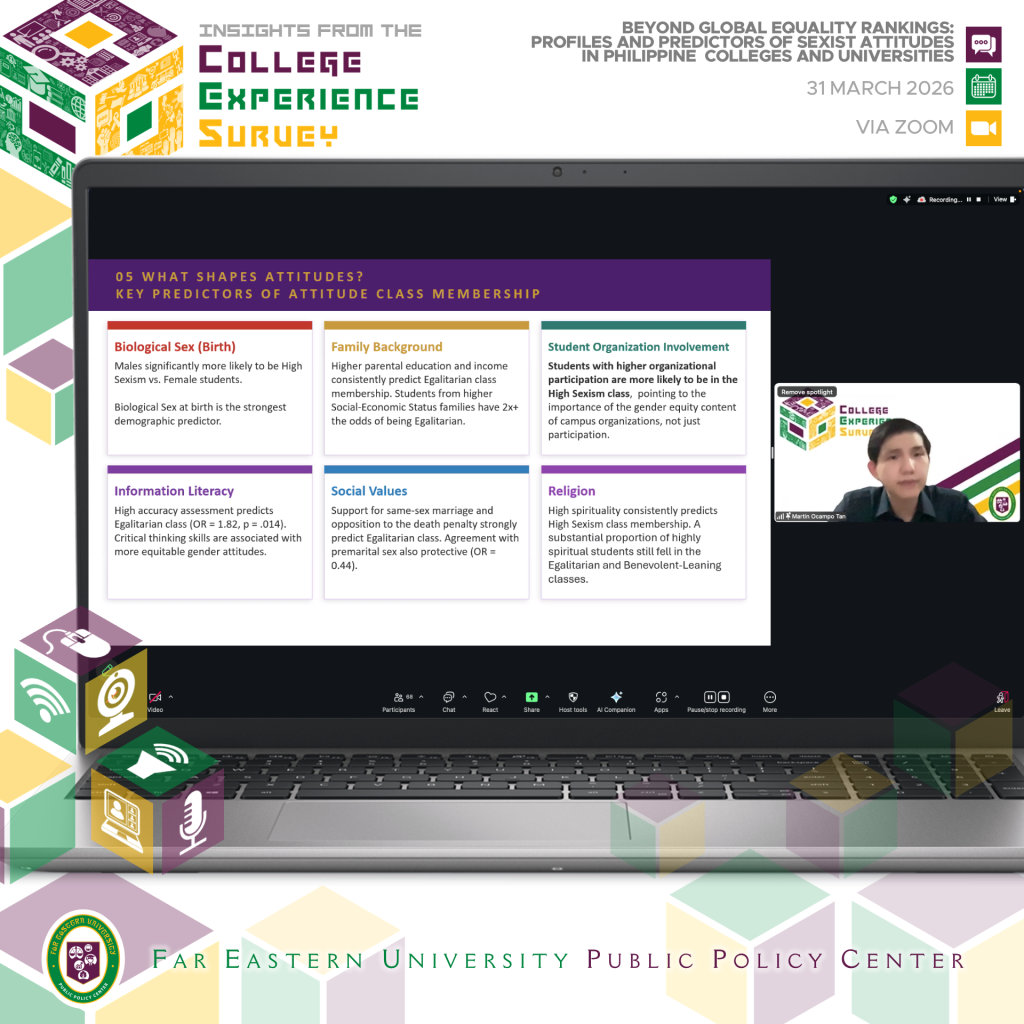
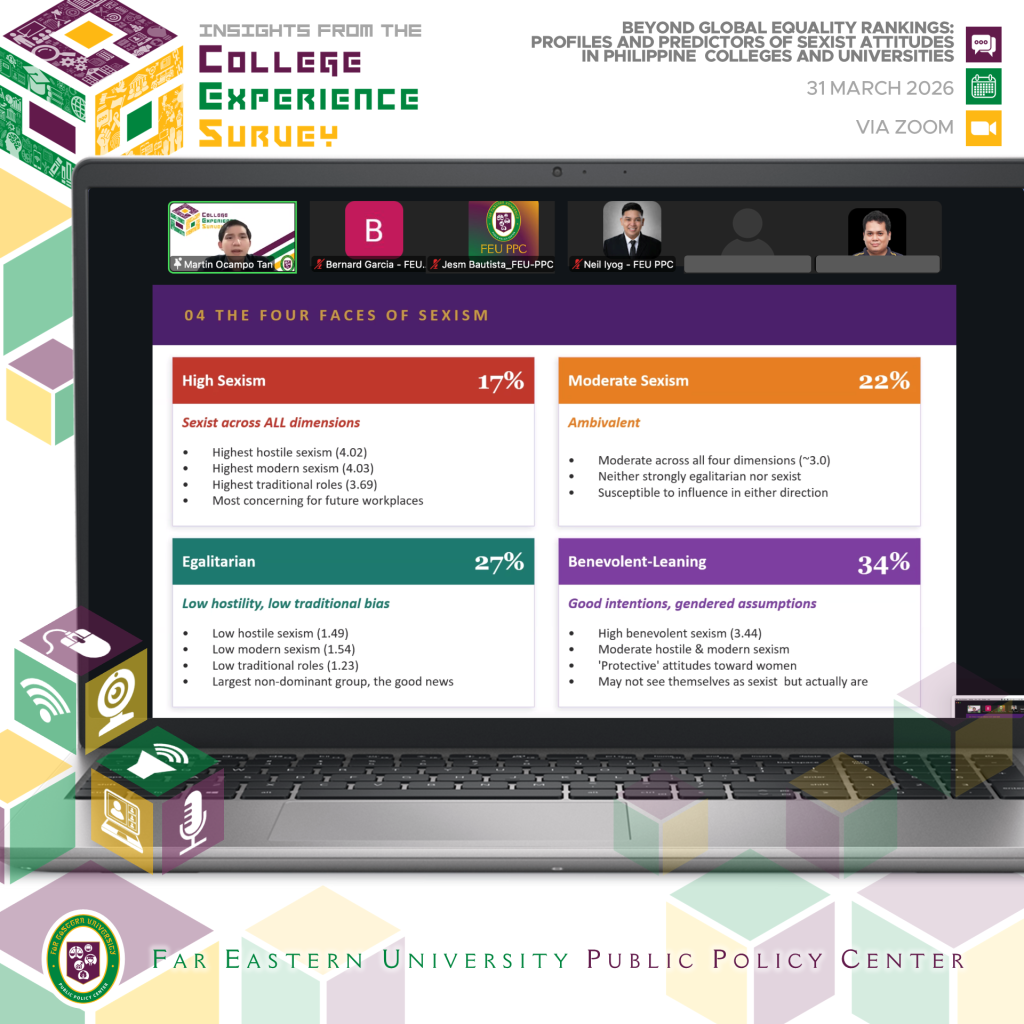
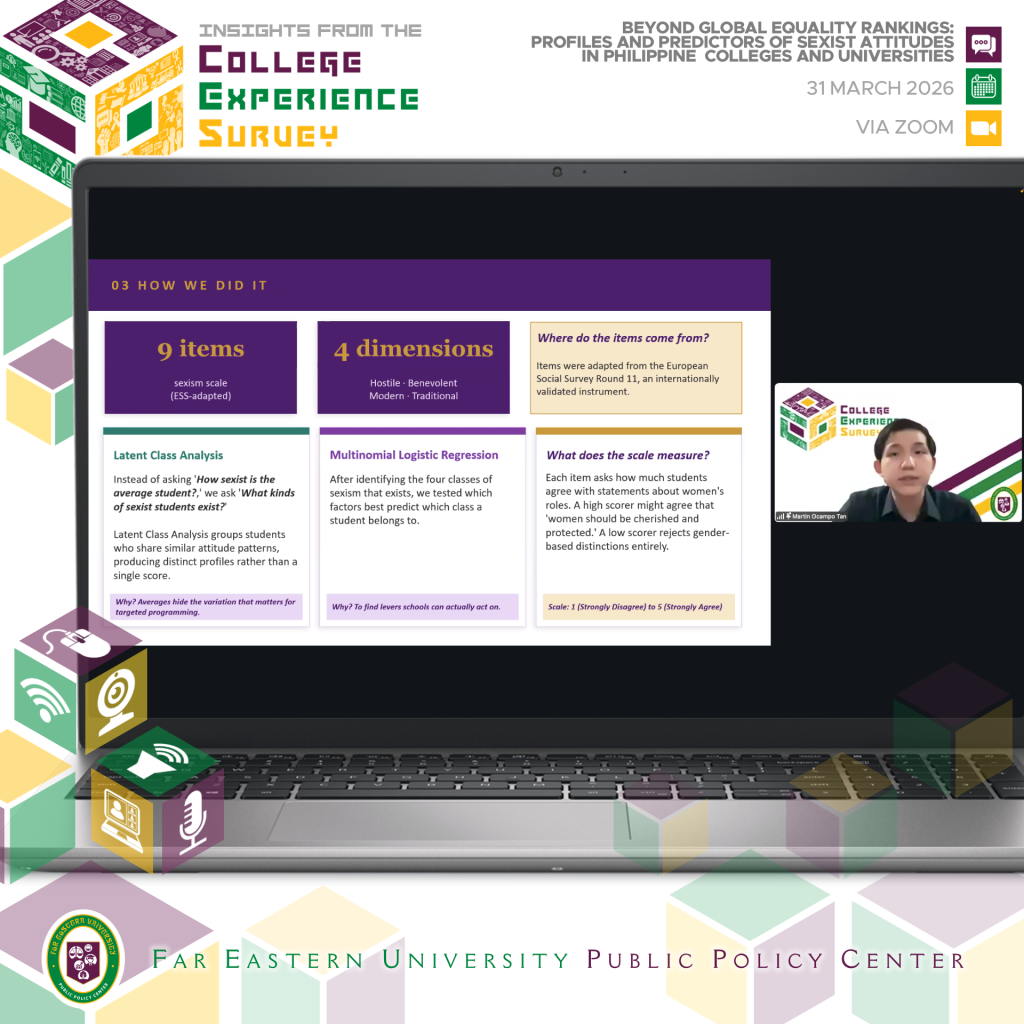
The forum opened with remarks from Arjay Mercado, Program Manager of FEU PPC, followed by a data-driven main presentation from Martin Ocampo Tan (FEU PPC Data Analyst), . Drawing from the nationally representative College Experience Survey 2024, Tan presented findings using a person-centered approach and Latent Class Analysis. He revealed distinct profiles of sexist attitudes among college students across the dimensions of benevolent, hostile, traditional, and modern sexism, and identified key socio-economic, collegiate, and institutional predictors of these profiles.
Panel reactions and an open forum followed, featuring:
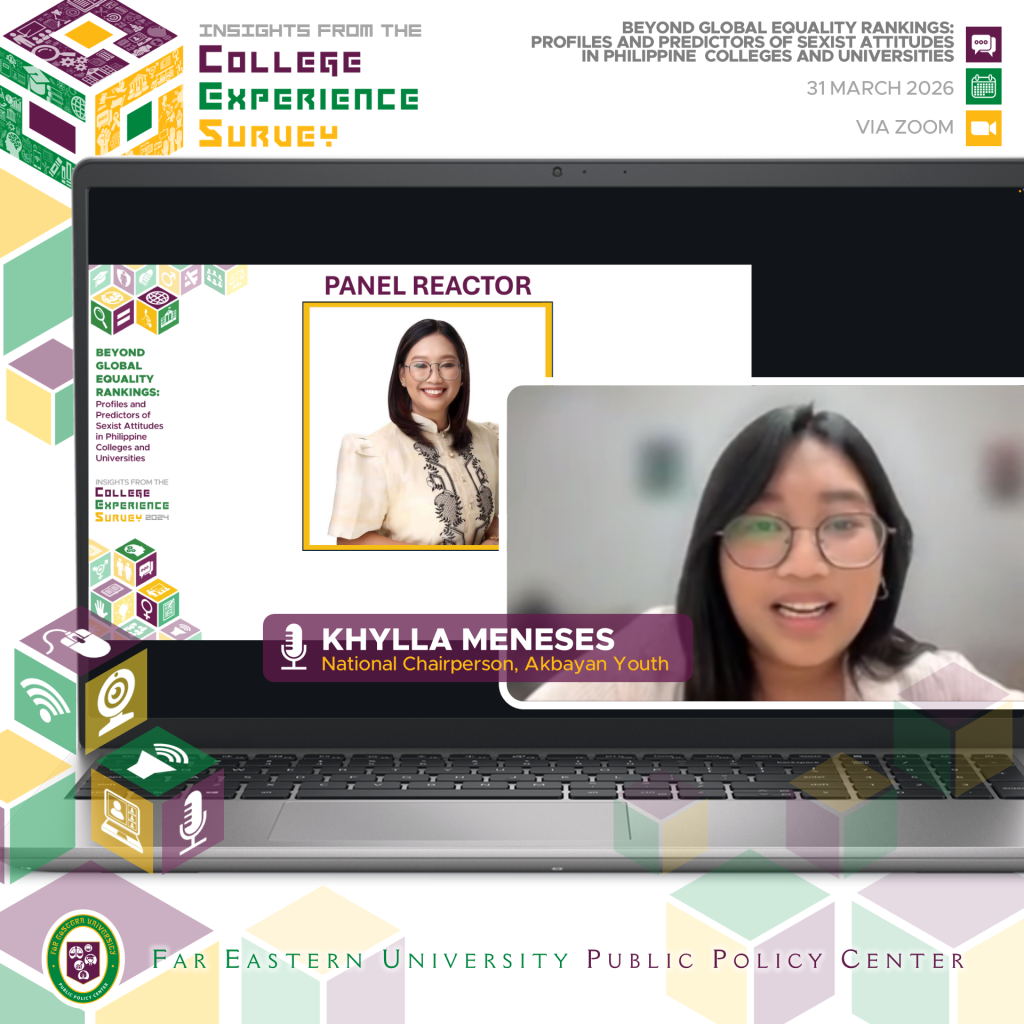
Ms. Khylla Meneses – National Chairperson, Akbayan Youth
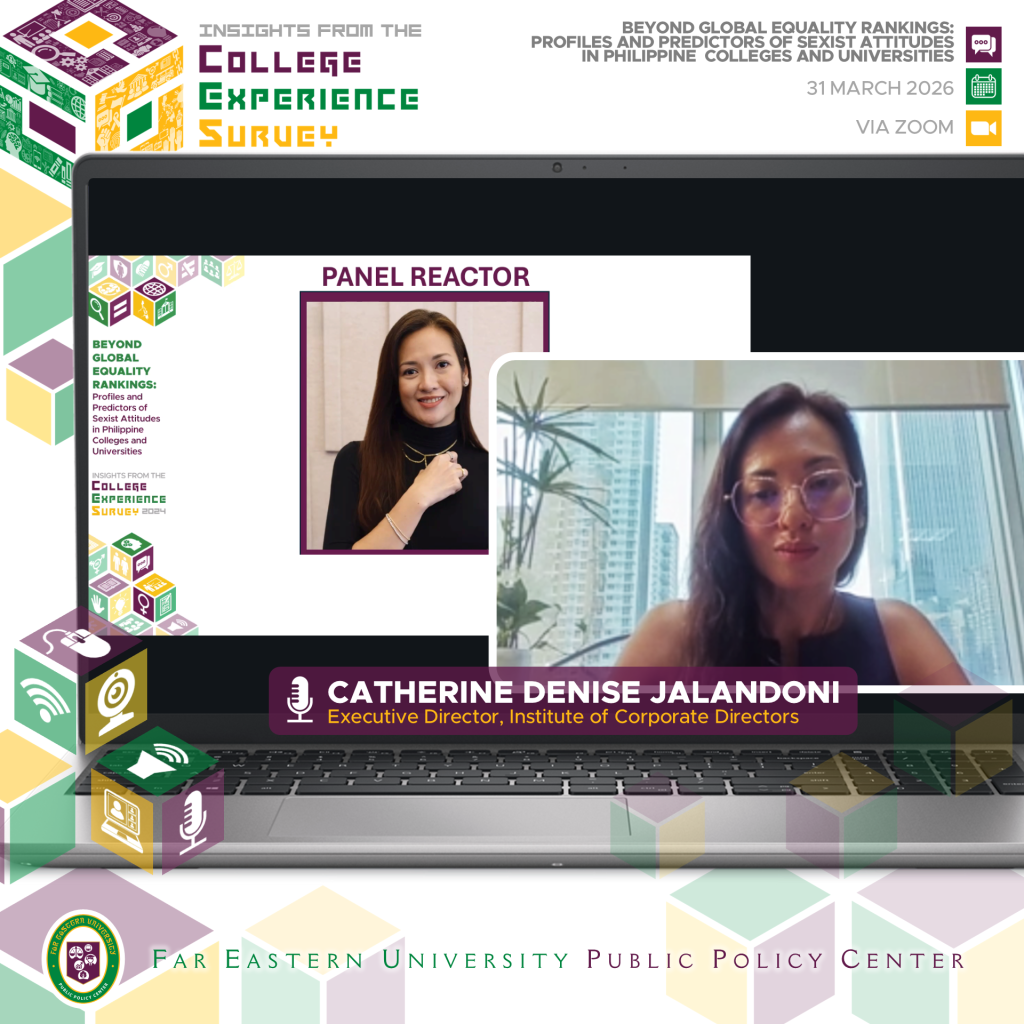
Ms. Catherine Denise Jalandoni – Executive Director, Institute of Corporate Directors
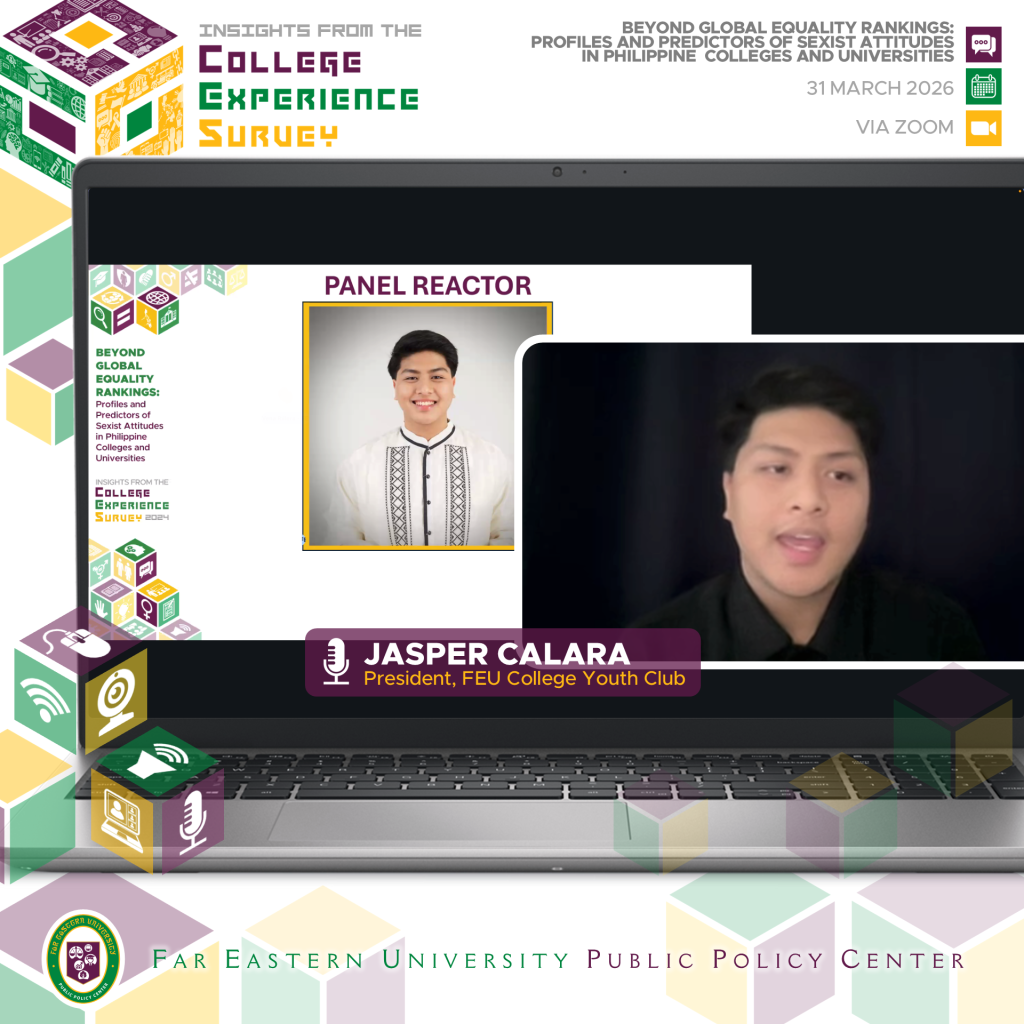
Mr. Jasper Calara – President, FEU College Youth Club
The discussion highlighted how, despite the Philippines ranking 3rd in East Asia and the Pacific in the 2025 Global Gender Gap Report, persistent sexist attitudes continue to undermine real progress — as shown by the country’s 70th ranking in the 2024 SDG Gender Index. Panelists and participants stressed that true gender equality requires more than closing statistical gaps; it demands transforming mindsets on the ground.
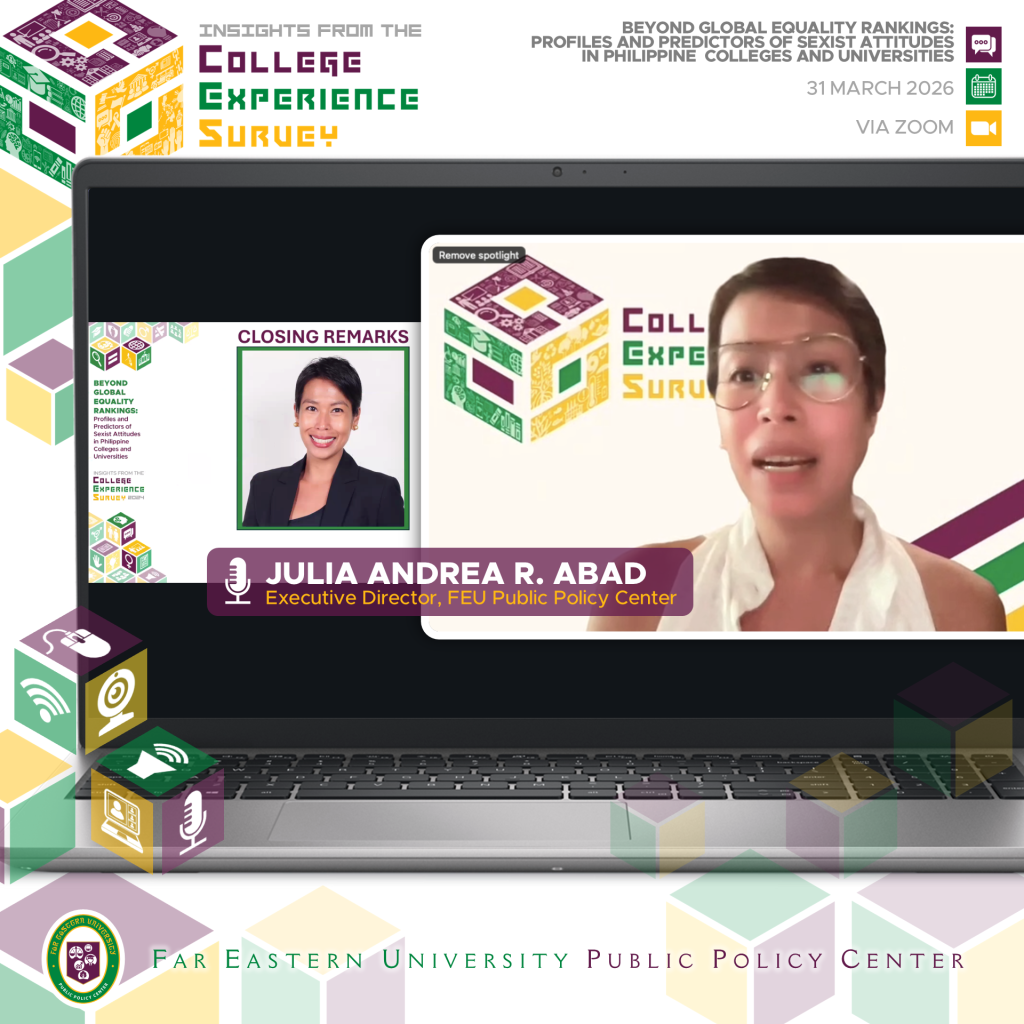
Moderated by Justin Muyot (FEU PPC Technical Consultant), the open forum allowed students and young leaders to engage directly with the findings. The event closed with remarks from Ms. Julia Andrea Abad, Executive Director of the FEU PPC.
The forum reinforced the FEU Public Policy Center’s commitment to civic education and active citizenship, equipping participants with evidence-based insights to challenge harmful norms and drive gender-equality initiatives in their own universities and communities.